Multidimensional Empirical Evaluation of Social Trust, Civic Norms, Cooperative Behavior, and Institutional Confidence in India
An analysis of social trust, civic norms, cooperative behavior, and institutional confidence in India using longitudinal surveys and behavioral studies.
Show case file details
Method
Literature Review
Length
13 minutes.Source Material
- Source 1: Inglehart–Welzel Cultural Map (from the World ... - WVS Database
- Source 2: On the Interpretation of World Values Survey Trust Question: Global Expectations vs. Local Beliefs - IZA Institute of Labor Economics
- Source 3: Trust - Our World in Data
- Source 4: Social Class Predicts Generalized Trust But Only in Wealthy Societies - ResearchGate
- Source 5: Generalizing Trust - How Outgroup-Trust Grows Beyond Ingroup-Trust - World Values Survey
- Source 6: Generalizing Trust - How Outgroup-Trust Grows Beyond Ingroup-Trust - World Values Survey
- Source 7: Social Capital, Voluntary Associations and Collective Action - WVS Database
- Source 8: Prosocial Behavior in Young Preschoolers: A Cross-Cultural Study across The Netherlands, India, and China - Taylor & Francis
- Source 9: Prosocial Reasoning and Behaviour among Indian Children: A Naturalistic Study | Request PDF - ResearchGate
- Source 10: Prosocial Behavior in Young Preschoolers: A Cross-Cultural Study across The Netherlands, India, and China - PubMed
- Source 11: Prosocial Behavior in Young Preschoolers: A Cross-Cultural Study across The Netherlands, India, and - UU Research Portal
- Source 12: Integration of Constitutional Principles into Education for Holistic Development of Nation - IJFMR
- Source 13: Critical Caste Studies And Civic Education: Perspectives On Ambedkar's Social Justice
- Source 14: (PDF) CIVIC SENSE IN INDIA: FROM INDIFFERENCE TO INVOLVEMENT -A MULTIDISCIPLINARY STUDY OF BEHAVIOR, GOVERNANCE, AND YOUTH ENGAGEMENT - ResearchGate
- Source 15: Social Capital: Implications for Development Theory, Research, and Policy - VTechWorks
- Source 16: Does social capital contribute to prevention and control of the COVID-19 pandemic? Empirical evidence from China - PMC
- Source 17: The Impact of Social Capital and Community Empowerment on Regional Revitalization Practices: A Case Study on the Practice of University Social Responsibility Programs in Wanli and Jinshan Districts - MDPI
- Source 18: Transaction cost theory: Past progress, current challenges, and suggestions for the future
- Source 19: Social capital and entrepreneurship: An exploratory analysis - Academic Journals
- Source 20: social networks as contract enforcement: evidence from a lab experiment in the field
- Source 21: Social Networks as Contract Enforcement: Evidence from a Lab Experiment in the Field - Stanford University
- Source 22: The role of trust as an informal social mechanism for contract enforcement among young women microenterprises in financial markets in sub-Saharan Africa - Emerald Publishing
- Source 23: Social Capital as Currency: Leveraging Community Networks in Social Entrepreneurship
- Source 24: Effect of Social Capital on Mitigating Transaction Uncertainty of Small Enterprises in Sri Lanka - Science Publishing Group
- Source 25: (PDF) Effect of Social Capital on Transaction Costs of Small Enterprises in Sri Lanka
- Source 26: Returns to Relationships: Social Capital and Household Welfare in India - MDPI
- Source 27: Navigating trust and health in India: the influence of social status and neighbourhood environment - PMC
- Source 28: Collective Action and Community Development: Evidence from Self-Help Groups in Rural India - World Bank Document
- Source 29: (PDF) Collective Action and Community Development: Evidence from Self-Help Groups in Rural India - ResearchGate
- Source 30: Do Social Interactions Facilitate Cooperative Behavior? Evidence from a Group Lending Experiment in India
- Source 31: Social capital fosters organisational resilience: Evidence from farmer collectives and farmer producer organisations - Horizon e-Publishing Group
- Source 32: Conflict for cooperation and bargaining for equity: a relational understanding of conflicts and bargaining networks in an Indian dairy cooperative | International Journal of Sociology and Social Policy | Emerald Publishing
- Source 33: Cooperative Theory: New Approaches - USDA Rural Development
- Source 34: FACTORS FOR SUCCESSFUL DEVELOPMENT OF FARMER COOPERATIVES IN NORTHWEST CHINA - Massey Research Online
- Source 35: Extending a Hand: Corruption and Solidarity with the Less Privileged Domestically and Beyond - PMC
- Source 36: TAX MORALE: THEORY AND EMPIRICAL ANALYSIS OF TAX COMPLIANCE
- Source 37: The Determinants of Tax Morale in India - NIPFP
- Source 38: A Decadal Systematic Review of Factors Underlying Tax Compliance in the Informal Sector
- Source 39: (PDF) Tax Compliance Challenge through Taxpayers' Typology - ResearchGate
- Source 40: Effect of Social Norms on Corporation Tax Compliance Among Medium and Large Enterprises in Kiambu East, Kenya - EdinBurg Journals & Books publishers
- Source 41: Business Sutra : A Very Indian Approach To Management - PDFDrive.com
- Source 42: Big Data Meets Jugaad: Cultural Innovation Strategies for Sustainable Performance in Resource-Constrained Developing Economies - MDPI
- Source 43: Jugaad CoLab: Decolonial Poetics, Minimal Computing, and South Asian Digital Humanities
- Source 44: Jugaad and innovation: Which links? Abstract - Verona - Univr
- Source 45: Influence of jugaad culture on business sustainability in India - IDEAS/RePEc
- Source 46: ETHICAL CLIMATE AND RULE BENDING: HOW ORGANIZATIONAL NORMS CONTRIBUTE TO UNINTENDED RULE CONSEQUENCES - ResearchGate
- Source 47: Rule bending, sociological citizenship, and organizational contestation in microfinance
- Source 48: Betwixt agency and accountability: re-visioning street-level bureaucrats - UTS ePress
- Source 49: Norm Persistence (Chapter 6) - Making Bureaucracy Work
- Source 50: Is it corruption? An Institutional Logic approach to corruption study in Thailand - CentAUR
- Source 51: Status Inequality and Public Goods - IIM Bangalore
- Source 52: Do Citizens Enforce Accountability for Public Goods Provision? Evidence from India's Rural Roads Program | The Journal of Politics: Vol 86, No 1
- Source 53: The political economy of public goods: Some evidence from India. | MIT Economics
- Source 54: Learning from diversity: “Jati” fractionalization, social expectations and improved sanitation practices in India - ISI Delhi
- Source 55: The Impact of Welfare on Intergroup Relations: Caste-Based Social Insurance and Social Integration in India | American Political Science Review - Cambridge University Press & Assessment
- Source 56: Caste and religious diversity on formation of social capital: A field survey in India and measurement issues - Emerald Publishing
- Source 57: (PDF) An Inquiry into Households' Confidence Levels in Various ..., accessed on March 28, 2026
- Source 58: SOCIETY POLITICS BETWEEN ELECTIONS - Lokniti
- Source 59: Representative Democracy Is Popular Globally but Criticized for How It's Working | Pew Research Center
- Source 60: Views of different types of government systems across 24 countries - Pew Research Center
- Source 61: iprr vol. 4 issue 1
- Source 62: India's 2024 Elections: Has Democratic Backsliding Come to a Halt? - IAI
- Source 63: (PDF) Enhancing Voter Turnout: A Comprehensive Analysis of Recent Initiatives by the Election Commission of India - ResearchGate
- Source 64: Reimagining Public Administration: The Urgent Need for a Government Efficiency Department in India - IJFMR
- Source 65: CSDS-Lokniti pre-poll survey | 'BJP has an edge, but a tough fight is possible' - The Hindu
- Source 66: The BJP Debacle in Uttar Pradesh – NUS Institute of South Asian Studies (ISAS)
- Source 67: From Screens to Streets: Role of Digital Literacy and Misinformation in Shaping Democratic Participation in Nepal
- Source 68: THE REPLAYBOOK - Tactical Tech
- Source 69: Algorithmic Curation and Users' Civic Attitudes: A Study on Facebook News Feed Results
- Source 70: The Polarizing Impact of Political Disinformation and Hate Speech: A Cross-country Configural Narrative - PMC
- Source 71: Motivation and Trust: How Dual Screening Influences Offline Civic Engagement Among Taiwanese Internet Users - International Journal of Communication
- Source 72: Populism and social media use: comparing the Indian Prime Minister Narendra Modi's strategic use of Twitter during the 2014 and the 2019 election campaigns - ResearchGate
- Source 73: The Dynamics and Diffusion of Campaign Misinformation - University of Exeter
- Source 74: Exposure to diverse political views in contemporary media environments - Frontiers
- Source 75: (PDF) Media trust and health communication among urban and rural women in Aligarh District, India - ResearchGate
- Source 76: Capacity Building of Self Help Group Members in Community Action on Health
- Source 77: The Role of Media Exposure and Trust in Healthcare Providers in Shaping COVID-19 Vaccination Behaviour: Evidence from a Community-Based Survey in Haryana
- Source 78: How Authoritative Media and Personal Social Media Influence Policy Compliance Through Trust in Government and Risk Perception: Quantitative Cross-Sectional Survey Study - Journal of Medical Internet Research
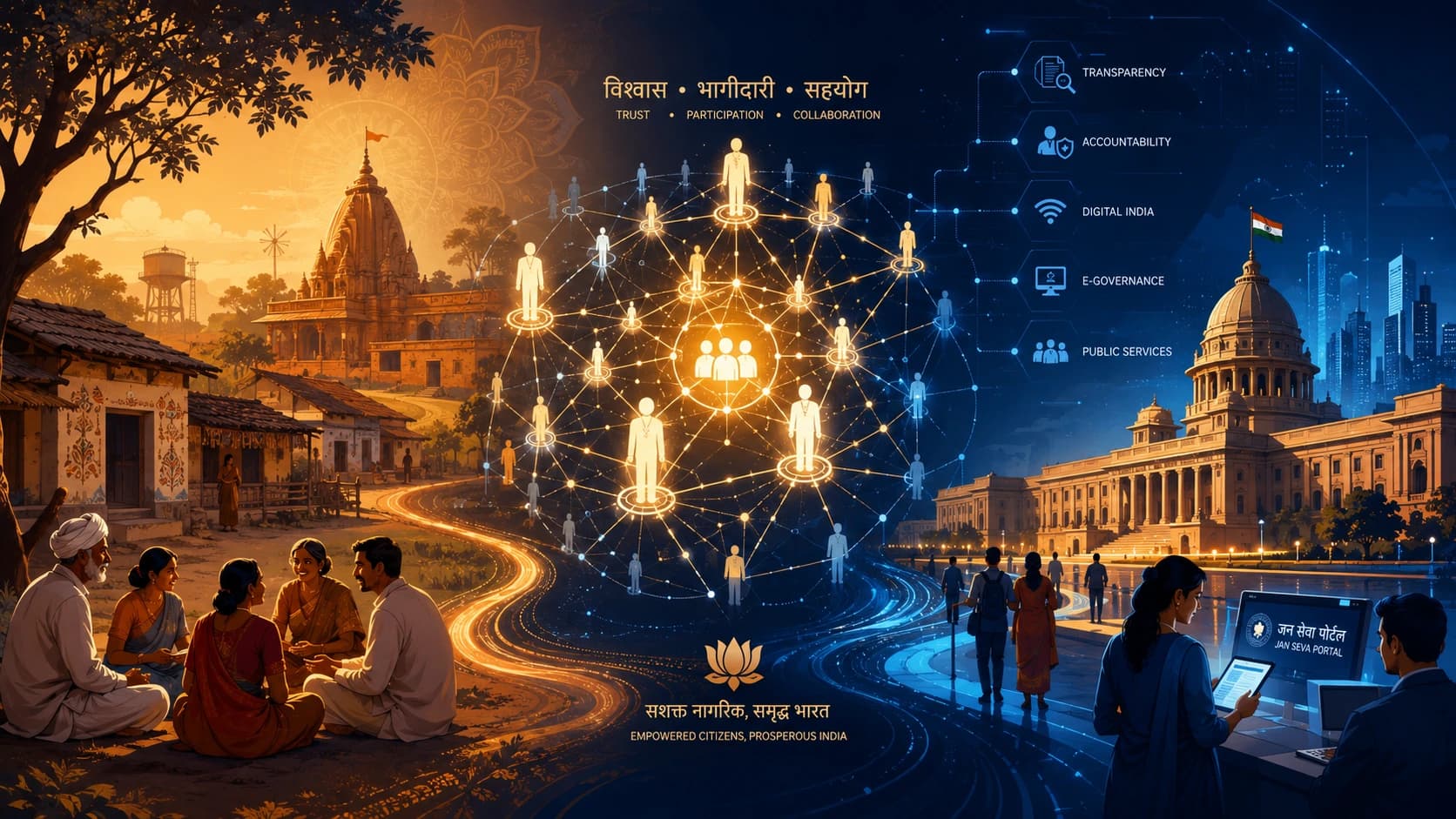
Introduction to the Behavioral and Institutional Matrix
The efficacy of formal governance structures and the efficiency of economic coordination within any nation are inextricably linked to the underlying socioculturally embedded matrix of human behavior. In emerging market economies characterized by rapid structural transformations, the interplay between codified legal frameworks and the invisible infrastructure of social trust, civic norms, and cooperative behavior dictates the trajectory of democratic legitimacy and public goods provision. India presents an exceptionally complex, heterogeneous environment for the empirical evaluation of these phenomena. Defined by profound linguistic, religious, and caste-based stratification, alongside a robust democratic apparatus that continuously attempts to bridge deeply entrenched traditional hierarchies with modern secular-rational aspirations, the Indian state operates within a unique behavioral paradigm.
This comprehensive report provides an exhaustive, multidimensional analysis of the psychosocial and institutional determinants of governance, market behavior, and civic engagement in India. By systematically synthesizing large-scale longitudinal datasets—including multiple waves of the World Values Survey (WVS), the India Human Development Survey (IHDS), the Asian Barometer Survey (ABS), and the Lokniti-CSDS electoral barometers—with contemporary behavioral economic experiments and sociological field studies, a nuanced, multi-scalar paradigm emerges. The subsequent analysis dissects how generalized trust mediates market transaction costs, how status inequality refracts the spatial distribution of public goods, how the cultural phenomenon of jugaad simultaneously bypasses and erodes formal state capacity, and how modern digital communication ecosystems are fundamentally reshaping institutional confidence and electoral dynamics.
The Architecture of Social Trust and Cultural Evolution
Generalized vs. Particularized Trust: A Cross-National Analytical Context
Trust functions as the foundational social capital of any cooperative societal or economic endeavor. Empirical models generally bifurcate this concept into particularized trust—defined as confidence in known ingroups, such as family, caste affiliations, or immediate geographic communities—and generalized trust, which encompasses confidence in anonymous outgroups, strangers, and the broader societal collective. The historical expansion of generalized trust is strongly correlated with a society's transition from traditional, survival-oriented value systems to secular-rational, self-expression-oriented paradigms.1
According to Wave 7 of the World Values Survey (WVS), which captured data from 2017 to 2022, approximately 35% of Indian respondents agreed with the general proposition that "most people can be trusted".2 This empirical metric places India in an intermediate, transitional position globally. It severely trails the high-trust societies of the Nordic region—where generalized trust frequently exceeds 60% due to the presence of robust, universal welfare states, high societal homogeneity, and strong institutional predictability—but it remains substantially higher than several Latin American nations, such as Brazil, Colombia, and Peru, where generalized trust lingers below the 10% threshold.3
| Societal Archetype / Region | Dominant WVS Value Dimensions | Generalized Trust Levels | Macro-Economic and Institutional Characteristics |
|---|---|---|---|
| Nordic Countries (e.g., Sweden, Norway) | Secular-Rational / Self-Expression | High (>60%) | Robust universal welfare state, high institutional predictability, strong generalized outgroup trust, low systemic inequality. |
| India | Traditional / Survival-Transition | Moderate (~35%) | High structural diversity, highly segmented informal kinship networks, rapid digital economic transition, fragmented public goods. |
| Latin America (e.g., Brazil, Colombia) | Traditional / Self-Expression | Low (<10%) | High income inequality, historical institutional volatility, reliance on localized patronage networks. |
| Russia / Eastern Europe | Secular-Rational / Survival | Low to Moderate | Priority on security over liberty, low deference to traditional authority but pervasive distrust in outgroups and strangers. |
The structural determinants of generalized trust in India defy the linear patterns frequently observed in advanced Western economies. In wealthy nations, a higher socioeconomic status (SES) typically predicts higher generalized trust, as affluent individuals possess the financial and legal resources to buffer the risks associated with trusting strangers.4 However, empirical analyses utilizing WVS data reveal that in less wealthy societies like India, this correlation collapses; even individuals of high social class exhibit low generalized trust.4 The underlying third-order implication of this data is that individual wealth cannot compensate for the absence of a macro-level socio-political-economic infrastructure that reliably penalizes opportunistic behavior. When the legal and institutional scaffolding is perceived as weak, backlogged, or inaccessible, the cognitive risk of trusting an outgroup member remains prohibitively high, regardless of an individual’s personal financial safety net.4
Furthermore, WVS data mapping interpersonal trust against the Gini coefficient reveals a strong negative correlation globally: higher economic inequality reliably dampens generalized trust.3 In highly unequal environments, individuals are psychologically predisposed to trust only those who are similar to themselves, viewing outgroups as competitors for scarce resources.3 Societal outgroup trust only extends beyond the level projected by ingroup trust when human empowerment and robust institutional design diminish people's absolute dependence on their immediate ingroups for physical and economic survival.5 Consequently, emancipative social capital—which motivates elite-challenging actions and demands for democratic accountability—struggles to take root where survival values predominate.1
Early Socialization and the Ontogeny of Prosocial Behavior
The foundation of generalized trust and civic orientation is established during early childhood socialization. Cross-cultural psychological studies examining preschoolers in India, the Netherlands, and China provide critical insights into how cultural models dictate prosocial behaviors such as helping, sharing, and comforting. Empirical observations reveal no significant cross-cultural deficit in raw prosocial behaviors among young children.8
However, the maternal socialization goals driving these behaviors differ structurally. While Dutch families align with an "independence" cultural model, urban Indian families are categorized within an "autonomous-relatedness" model.10 This hybrid model values both self-enhancement (autonomy) and self-transcendence (group harmony and relatedness).10 The cognitive dissonance arises when these children transition into formal institutional settings. Research indicates that many Indian educational institutions function through rigidly hierarchical structures that prioritize rote discipline, obedience, and deference to authority over participatory governance or student agency.12 While national school curricula theoretically espouse democratic ideals and secularism, the lived reality of the students is heavily authoritarian, stifling the development of elite-challenging civic engagement.12 As a result, the educational system frequently fails to organically foster the emancipative social capital that cross-national research identifies as crucial for long-term democratic accountability and high-level institutional trust.7
Social Capital, Transaction Costs, and Economic Coordination
The Substitution of Formal Contracts with Network Centrality
In the economic sphere, social capital actively dictates the mechanics of market coordination and transaction costs. Theoretical frameworks pioneered by sociologists and economists such as Bourdieu, Coleman, and Putnam conceptualize social capital through various lenses: communitarian (local associations), networks (information flow), institutional (rule of law), and synergy (state-society collaboration).15 Transaction cost economics (TCE) posits that in the absence of robust formal contract enforcement, opportunistic behavior threatens the viability of market exchanges by elevating search, bargaining, and decision costs.18
In India, the chronic backlog and relative inaccessibility of the formal judicial system necessitate the substitution of formal legal enforcement with social proximity and network centrality.20 High-stakes behavioral lab-in-the-field experiments conducted across 34 Indian villages reveal that the capacity for economic cooperation in the absence of external contract enforcement depends entirely on a subject's position within the local network.20 Socially close pairs will cooperate and honor agreements even when formal enforcement mechanisms are explicitly removed by the experimenters.20 Conversely, distant pairs fail to cooperate without third-party enforcement.20
Furthermore, individuals who occupy highly central positions within their local social networks display significantly more cooperative behavior, as the implicit threat of reputational destruction and social ostracization serves as "social collateral".20 While this network-based trust facilitates localized survival, micro-entrepreneurship, and the enforcement of informal contracts, it inherently limits the macroeconomic scaling of enterprises.19 Small businesses cannot safely extend their supply chains or credit lines beyond the geographic and sociological boundaries of their known, trusted networks, leading to a fragmented, sub-optimal equilibrium in the broader national market.23
Bridging vs. Bonding Capital in Welfare Outcomes
The India Human Development Survey (IHDS) demonstrates that social capital serves as a critical compensatory mechanism for state failure in developing economies, profoundly influencing health, welfare, and educational outcomes.26 Bonding capital (dense, localized ties) and bridging capital (cross-community, weaker ties) play distinct roles. Household involvement in community associations and the possession of formal sector contacts significantly increase the odds of youths attending college and improve household participation in microcredit programs.26
The moderation of health outcomes by social capital further illustrates its complexity. District-level income inequality acts as a critical moderator for the health impacts of interpersonal trust. In highly unequal Indian districts, generalized trust is associated with improved self-rated health, acting as a psychological buffer that facilitates access to diverse resources.27 In contrast, a strict reliance on particularized trust in highly unequal areas correlates with increased rates of depression, likely due to the extreme psychological strain, resource depletion, and obligatory burdens placed on tight kinship networks facing systemic deprivation.27
| Dimension of Social Capital | Definition and Primary Function in the Indian Context | Observed Empirical Outcomes and Limitations |
|---|---|---|
| Bonding Capital | Dense, overlapping ties within homogenous groups (caste, family, village). | Provides vital survival safety nets and informal contract enforcement. Limits access to novel information and restricts economic scaling. |
| Bridging Capital | Weaker, cross-cutting ties connecting heterogeneous groups or distant networks. | Facilitates upward mobility, college attendance, access to diverse markets, and improved self-rated health. Often difficult for marginalized groups to acquire. |
| Institutional Capital | Vertical ties between citizens and formal state apparatuses or legal systems. | Severely deficient for lower-status groups due to spatial segregation and bureaucratic opacity, necessitating reliance on informal jugaad or patronage. |
Micro-Institutions and the Cultivation of Cooperative Behavior
The Behavioral Mechanics of Self-Help Groups (SHGs)
To overcome the high transaction costs and pervasive coordination failures inherent in rural, low-trust environments, India has orchestrated one of the world's largest expansions of micro-institutions, primarily through the deployment of Self-Help Groups (SHGs) under the National Rural Livelihood Mission.28 SHGs typically organize vulnerable populations—predominantly poor women—into localized financial and social collectives consisting of 10 to 20 members.28
Empirical evaluations of SHGs reveal profound behavioral and sociocultural shifts that outpace immediate financial gains. Two years of sustained exposure to SHG programs significantly increases women's participation in civic activities, household decision-making processes, and non-agricultural labor force entry.28 Interestingly, these cognitive and relational social capital gains are vastly more pronounced than direct economic metrics, as impact assessments often find no immediate, disproportionate increase in baseline household income resulting solely from SHG participation.28
The success of SHGs in fostering cooperative behavior is structurally tethered to the frequency of group interaction. Behavioral experiments utilizing trust games and public goods lottery games within these cohorts demonstrate that groups subjected to a higher frequency of mandatory meetings exhibit significantly greater cooperation and a higher willingness to share lottery payouts with peers.30 This outcome is not driven by an artificial injection of altruism, but rather by the reduction of information asymmetries. Frequent interactions improve the capacity of members to monitor each other's actions, thereby enabling the reliable enforcement of informal social sanctions and punishment schemes against opportunistic behaviors, such as loan default or free-riding.22 The SHG model proves that systematically engineered localized networks can successfully manufacture the social collateral needed to integrate marginalized populations into collective action frameworks.
Evolutionary Paradoxes in Agricultural Cooperatives
Similar behavioral dynamics govern cooperative action in larger economic aggregates, such as Indian dairy cooperatives and broader farmer producer organizations (FPOs). The resilience of these collectives, especially during macroeconomic shocks or supply chain disruptions like the COVID-19 pandemic, is heavily predicated on the presence of cognitive social capital (shared values and strategic understanding) and relational social capital (trust and reciprocity).31
However, systematic literature reviews indicate an evolutionary paradox within the lifecycle of these organizations: as FPOs mature, increase their membership base, and become more integrated with formal, distant commercial markets, their initial high levels of localized social capital invariably tend to decline.31 This transition represents a critical vulnerability point. As the collective moves from a closed, homogenous network relying on particularized trust to an open market entity requiring generalized trust and formal contract enforcement, the absence of strong, reliable formal institutional backing often leads to internal fragmentation, elite capture, and ultimately, organizational failure.31
Civic Norms and the Paradox of Rule-Following
Tax Morale and the Behavioral Economics of State Compliance
Civic norms represent the shared expectations of a citizen's duties toward the collective, with tax compliance serving as the most direct, measurable empirical proxy for the state-citizen psychological contract.35 The Indian taxation system relies profoundly on the principle of voluntary compliance, given that less than 1% of taxpayers are audited by the state annually.37 Despite pervasive cultural narratives emphasizing systemic corruption and evasion, empirical evaluations of tax morale—defined as the intrinsic, internal motivation to pay taxes—reveal surprisingly high baseline levels in India. WVS data indicates that approximately 77% of Indian respondents assert that cheating on taxes is "never justified," representing a robust baseline of civic duty.37
However, the demographic stratification of this tax morale exposes deep fissures in the perceived equity and fairness of the Indian state. Paradoxically, full-time salaried employees exhibit significantly lower intrinsic tax morale than self-employed individuals.37 This phenomenon yields a profound behavioral insight: salaried employees, whose taxes are automatically deducted at source (TDS), operate in a rigid environment where evasion is structurally impossible. Consequently, they often perceive themselves as bearing a vastly disproportionate burden of the state's revenue generation compared to self-employed individuals, who navigate the informal or cash-based economy with greater impunity and flexibility.37 This perceived inequity in the distribution of the tax burden breeds deep resentment, lowering the intrinsic moral compulsion to comply, even if observed compliance remains artificially high due solely to automated enforcement mechanisms.37
Furthermore, empirical modeling demonstrates a statistically significant positive correlation between tax morale and citizen trust in the executive branch—specifically the civil services and government administrators.37 Interestingly, trust in the legal system and the judiciary does not yield a statistically significant impact on tax morale, likely because the vast majority of citizens have no direct interaction with formal tax litigation or the courts regarding revenue disputes.37 The broader implication is that civic duty in India is highly conditional; it expands or contracts based on the everyday administrative fairness and professionalism experienced at the hands of frontline bureaucrats, rather than abstract legal ideals or constitutional mandates.37
| Demographic / Structural Variable | Impact on Intrinsic Tax Morale in India | Behavioral and Structural Rationale |
|---|---|---|
| Education Level | Positive | Greater awareness of public finance mechanisms and the role of taxation in nation-building and public service funding. |
| Age Cohort | Positive | Older demographics (50-64 years) exhibit stronger traditional civic compliance compared to younger cohorts (18-29 years). |
| Employment Status | Negative (for Salaried) | Salaried workers feel unfairly burdened due to strict automated withholding (TDS) compared to self-employed peers operating in the informal economy. |
| Economic Class | Negative (for Upper/Middle) | Lower classes connect tax revenues directly to survival-critical public goods; upper classes, relying on private markets, feel independent of state welfare. |
Data Source: Empirical Determinants of Tax Morale and Compliance.37
The Duality of Jugaad: Frugal Innovation vs. Institutional Erosion
The tension between strict rule-following and opportunistic rule-bending in India is perfectly epitomized by the cultural phenomenon of jugaad—a colloquial North Indian term denoting a flexible, innovative workaround, hack, or provisional agency used to overcome resource constraints or rigid bureaucratic hurdles.41 In Western corporate management and entrepreneurship literature, jugaad is frequently lauded as a vital driver of resilience, enabling Indian firms to achieve functional alternatives and cost-effectiveness in volatile, dynamic, and resource-scarce environments.42
However, viewed through the rigorous lens of institutional economics, public administration, and governance effectiveness, jugaad poses a severe systemic hazard. The societal normalization of rule-bending creates a sociological environment where formal organizational policies and codified laws are routinely bypassed in favor of personalized negotiation.46 In the context of street-level bureaucracy, officials and citizens alike resort to jugaad to navigate hyper-legalistic, rigid state structures. For example, ethnographic studies of the education bureaucracy in Uttar Pradesh and Uttarakhand reveal that concerns over political interference have led administrators to adopt hyper-legalistic, rigid postures.49 To overcome this paralysis, teachers and citizens rely on jugaad—utilizing personal networks, political pressure, and petty corruption to secure legitimate requests, such as standard transfers or resource allocations.49
While this facilitates provisional agency and immediate problem-solving for well-connected individuals, it simultaneously legitimizes corruption and deeply undermines the predictability required for macroeconomic coordination and equitable governance.48 This duality creates a destructive negative feedback loop: because citizens and frontline workers constantly bend rules to achieve basic efficiency, upper-level administrators respond by imposing even more rigid, legalistic rules to prevent corruption.49 This hyper-legalism further paralyses the system, making informal workarounds even more necessary for daily operational survival.49 The normalization of jugaad thus acts as a persistent cultural barrier to the maturation of India's formal Weberian institutional capacity, keeping the economy perpetually reliant on personalized, relationship-based navigation of the state apparatus rather than transparent, rules-based administration.
Diversity, Status Inequality, and the Political Economy of Public Goods
The "Status Refraction" Theory of Distributive Politics
One of the most heavily theorized problems in political economy is the relationship between social diversity, ethnic fractionalization, and the provision of state public goods. Traditional macroeconomic consensus, often drawing on global datasets, argues that ethnic or social diversity invariably leads to a "diversity penalty," resulting in lower collective investments in public infrastructure due to conflicting preferences, coordination failures, and a fundamental lack of inter-group trust.51
However, an exhaustive, granular analysis of nearly 600,000 Indian villages fundamentally upends this simplistic narrative, revealing that the diversity penalty in India is highly conditional and heavily mediated by embedded historical social hierarchies.51 The empirical data introduces the concept of "Status Refraction." In rural India, the diversity penalty does not occur uniformly across all heterogeneous populations. Social diversity only negatively impacts the provision of local public goods (such as roads, piped water, electricity, and schools) in administrative units where lower-caste groups (specifically Scheduled Castes and Scheduled Tribes) are in the numerical majority or preponderance.51 Conversely, when a highly diverse, fractionalized village is numerically dominated by higher-status or upper-caste groups, there is no corresponding deficit or penalty in public goods provision.51
This dynamic alters the fundamental understanding of collective action in developing democracies. The deficit in public goods is not a product of diverse groups failing to cooperate with each other at the grassroots level; rather, it is a result of how societal status impacts a community's political agency and its ability to successfully petition the higher tiers of the state apparatus for resource allocation.51
Spatial Segregation and Top-Down Institutional Discrimination
The mechanism of this status-based deprivation is severely amplified by the realities of spatial segregation. IHDS data indicates that over 60% of Indian villages maintain strict caste-based residential segregation, which not only inhibits inter-group trade and capital flow but practically eliminates the formation of generalized trust across community lines.55
Under India's partially decentralized governance system, the placement of public goods is determined by a complex interplay of bottom-up community demand (mobilization) and top-down state supply (allocation decisions).51 Because public administration at the block and district levels often possesses wide discretionary power, high-status groups can leverage their dense, elite networks and bonding capital to secure resources from the state even when they constitute a demographic minority at the village level.51 On the contrary, when lower-caste groups dominate a spatially segregated village, their profound lack of bridging capital to the upper echelons of the state administration results in systemic neglect and resource starvation.51 Therefore, the lack of institutional effectiveness in rural Indian infrastructure is not merely an accidental bureaucratic friction, but an active, sociological process where historical status inequalities are refracted through modern democratic institutions, producing highly unequal spatial distributions of wealth and public resources.51
| Variable in Distributive Politics | Impact on Public Goods Provision | Theoretical Mechanism |
|---|---|---|
| High Diversity + Upper-Caste Majority | Positive / Neutral | Dominant groups utilize rich elite networks and bridging capital to successfully extract resources from the upper state apparatus, bypassing local fractionalization conflicts. |
| High Diversity + Lower-Caste Majority | Highly Negative (Deficit) | Subordinate groups lack the political agency and external networks to petition the state successfully; vulnerable to top-down administrative discrimination and neglect. |
| High Spatial Segregation | Amplifies Deficits | Physical isolation makes status differences more salient, eases the logistical mechanics of state discrimination, and prevents the formation of cross-caste generalized trust. |
Institutional Confidence and Democratic Legitimacy
Temporal Trends and State-Level Variations in Confidence
Institutional confidence—defined as the degree to which citizens believe the state apparatus is competent, procedurally fair, and reliable—serves as the ultimate barometer for state legitimacy and democratic stability. Longitudinal assessments utilizing the India Human Development Survey (IHDS) reveal a marginal, albeit highly complex, improvement in overall confidence scores regarding sociopolitical institutions over time, rising slightly from 0.668 in 2004–2005 to 0.695 in 2011–2012.57 However, this aggregate national metric masks profound underlying volatilities, state-level disparities, and a persistent "governance deficit," wherein core state functions are trusted significantly less than non-state, market, or private institutions.57
The empirical landscape of institutional trust in India is deeply regionalized. While richer, highly industrialized states such as Gujarat, Maharashtra, and Haryana consistently report higher overall institutional confidence levels, heavily populated states in the Hindi belt (such as Bihar, Madhya Pradesh, and Uttar Pradesh), as well as structurally complex regions like Jammu and Kashmir, report systemic, troubling declines in confidence toward governance and justice systems.57
Furthermore, socioeconomic class and religious identities heavily dictate state perception. Lower-income households demonstrate a higher dependency on, and subsequently a higher baseline confidence in, government-provided services simply because they are entirely excluded by cost from private market alternatives.57 Conversely, marginalized religious groups, particularly Muslims, report structurally lower aggregate confidence in governance institutions compared to the Hindu majority, a pattern that correlates strongly with perceptions of systemic bias, discrimination, and majoritarian administrative practices.57
Electoral Trust, Law Enforcement, and the Judiciary
Data from the Lokniti-CSDS surveys provides granular insights into the citizen's immediate, everyday interface with the coercive and adjudicative arms of the state: the police and the judiciary. Trust in the police embodies a deep cognitive dissonance among the Indian populace. While the police are often viewed as highly effective in taking rapid, decisive action, they are simultaneously perceived as highly corrupt, procedurally unfair, and lacking in basic respect for citizens.58 Citizens recognize the utility of law enforcement but fully expect to be subjected to bribery and political interference during interactions.58 This validates the aforementioned reliance on jugaad and localized bonding capital; citizens are forced to utilize personal networks to navigate a police force that acts not as a neutral, Weberian arbiter of the law, but as a malleable instrument of local political power.48
The judiciary enjoys comparatively higher baseline trust than the police or local bureaucrats, yet this trust decays rapidly at the lower, more accessible tiers of the system.58 While the Supreme Court maintains robust confidence metrics (approximately 59% effective trust nationwide), district courts are viewed with deep skepticism (44%), heavily impacted by local political economies, staggering backlogs, and perceptions of elite manipulation.58
Electoral integrity remains the absolute bedrock of India's democratic legitimacy. Global surveys by the Pew Research Center indicate a global paradox: while a massive 77% of citizens across surveyed nations support the ideal of representative democracy, a median of 59% are deeply dissatisfied with its actual functioning, with 74% believing elected officials do not care about average citizens.59 This trend is highly visible in India. In recent electoral cycles, particularly the 2024 Lok Sabha elections, the Election Commission of India (ECI) has faced escalating public and partisan scrutiny. Issues surrounding the opacity of Electronic Voting Machines (EVMs), voter suppression, and the uneven enforcement of the Model Code of Conduct have fueled partisan divides regarding institutional fairness.61
While the ECI has launched numerous initiatives to enhance voter turnout—such as "Vote from Home" for the elderly, "Sakhi Booths" for women, and digital tracking applications—these technocratic interventions struggle to offset deep-seated livelihood anxieties.63 In 2024, 62% of citizens cited corruption as a major barrier to accessing public services, while inflation and unemployment drove significant voter realignments.64 Notably, post-poll data indicated a significant shift of Dalit (lower-caste) voters away from the ruling coalition, driven fundamentally by anxieties over potential constitutional changes that could threaten affirmative action protections—a powerful demonstration of marginalized groups utilizing the electoral process to defend institutional guarantees when they feel their status is threatened.62
The Digital Public Sphere, Media Exposure, and Epistemic Trust
The contemporary fragility of institutional trust and civic cohesion cannot be decoupled from the explosion of digital media, smartphone penetration, and the structural transformation of the Indian public sphere. Operating as a critical node in the global misinformation ecosystem, India's digital landscape yields a highly dualistic impact on civic engagement and generalized trust.67
On one vector, high exposure to digital news media and dual-screening (the practice of utilizing mobile devices to discuss political events during live broadcasts) measurably enhances political discussion, offline civic engagement, and democratic participation, particularly among the youth.71 It allows for the rapid mobilization of civil society, bypassing traditional media gatekeepers.
On the opposing, destructive vector, the unregulated proliferation of hyper-partisan content, deepfakes, and identity-based hate speech on end-to-end encrypted platforms like WhatsApp acts as a potent solvent against generalized trust.67 The Lokniti-CSDS reports highlight a profound epistemic paradox: a majority of surveyed respondents claim they actively distrust the political information received via WhatsApp, yet this self-reported cognitive skepticism fails to prevent the platform from successfully inciting real-world inter-communal violence, polarization, and the deep erosion of trust in official state narratives.67 This dynamic suggests that digital misinformation in India bypasses rational, cognitive trust filters, directly manipulating the deep-seated particularized trust (ingroup vs. outgroup biases) inherent in the nation's highly segregated social structure.70
Furthermore, a stark rural-urban divide dictates media trust and health communication behaviors. Urban populations, possessing higher digital literacy and educational capital, navigate the digital ecosystem with "habitual caution," utilizing heuristics—such as recognizing overly dramatic formatting—to filter suspicious content.67 Rural and marginalized populations, lacking these digital safeguards, rely heavily on interpersonal community networks, such as local ASHA (Accredited Social Health Activist) workers, to verify critical information.75 When these local trust intermediaries are either co-opted or saturated with sophisticated misinformation, institutional confidence collapses rapidly. This renders vital governance, electoral, and public health initiatives highly vulnerable to localized digital panics and coordinated disinformation campaigns, fundamentally threatening the stability of economic and social coordination.77
Conclusion
The empirical evaluation of India's political economy reveals that the effectiveness of its formal, codified institutions is inextricably tethered to its complex behavioral, sociological, and cultural foundations. The nation exists in a profound transitional state: possessing the ambitious, democratic architecture of a secular-rational society, yet persistently governed by the survival-oriented, particularized trust networks characteristic of a traditional, highly stratified society.
Several core mechanisms define this landscape. First, the chronic deficit in generalized trust ensures that economic transactions, contract enforcement, and market coordination remain heavily reliant on localized social capital. While this network centrality prevents total market failure in the absence of rapid judicial redress, it effectively caps the scaling potential of the informal economy and limits broad-based economic integration. Second, the structural inequity of the state—evidenced by the fractured tax morale among captive salaried classes and the status-refracted discrimination in the spatial distribution of public goods—highlights that Indian state capacity is not sociologically neutral. State resources and administrative responsiveness are actively contoured by deeply embedded caste and class hierarchies, severely amplified by residential segregation.
Third, the cultural reliance on jugaad, while providing necessary micro-level resilience and entrepreneurial agility in the face of poverty, actively cannibalizes macro-level institutional predictability. It traps the Indian bureaucracy in a self-defeating cycle of reactive hyper-legalism and normalizes an environment where the state is an entity to be bypassed or manipulated rather than transparently engaged. Finally, the rapid digitization of the Indian public sphere acts as a massive accelerant to these existing sociological fault lines. Unregulated digital ecosystems are actively weaponizing ingroup affinities and cognitive biases, further degrading the generalized outgroup trust that is an absolute prerequisite for robust democratic functioning and macroeconomic coordination.
Ultimately, enhancing institutional effectiveness in India cannot rely solely on technocratic reforms, digital tracking apps, or top-down legal mandates. It requires a fundamental restructuring of the state-citizen psychological contract—fostering emancipative civic education, dismantling spatial and status-based segregation, utilizing trusted local intermediaries to combat digital misinformation, and building bureaucratic frameworks that reward procedural fairness and transparency over punitive rigidity. Only by bridging the chasm between formal institutional design and the informal behavioral realities of its populace can India achieve the cohesive economic coordination and equitable public trust requisite for sustained developmental maturity.
Works cited
- Inglehart–Welzel Cultural Map (from the World ... - WVS Database, accessed on March 28, 2026, https://www.worldvaluessurvey.org/WVSContents.jsp?CMSID=Findings
- On the Interpretation of World Values Survey Trust Question: Global Expectations vs. Local Beliefs - IZA Institute of Labor Economics, accessed on March 28, 2026, https://docs.iza.org/dp9872.pdf
- Trust - Our World in Data, accessed on March 28, 2026, https://ourworldindata.org/trust
- Social Class Predicts Generalized Trust But Only in Wealthy Societies - ResearchGate, accessed on March 28, 2026, https://www.researchgate.net/publication/254111257_Social_Class_Predicts_Generalized_Trust_But_Only_in_Wealthy_Societies
- Generalizing Trust - How Outgroup-Trust Grows Beyond Ingroup-Trust - World Values Survey, accessed on March 28, 2026, https://www.worldvaluessurvey.org/AJPublications.jsp?CndPUTYPE=1&PUID=87&CndPUTYPE=1&PUID=87
- Generalizing Trust - How Outgroup-Trust Grows Beyond Ingroup-Trust - World Values Survey, accessed on March 28, 2026, https://www.worldvaluessurvey.org/WVSPublicationsBooks.jsp?PUB=87&PUB=87
- Social Capital, Voluntary Associations and Collective Action - WVS Database, accessed on March 28, 2026, https://www.worldvaluessurvey.org/AJPublications.jsp?CndPUTYPE=2&PUID=55
- Prosocial Behavior in Young Preschoolers: A Cross-Cultural Study across The Netherlands, India, and China - Taylor & Francis, accessed on March 28, 2026, https://www.tandfonline.com/doi/full/10.1080/00221325.2021.1891857
- Prosocial Reasoning and Behaviour among Indian Children: A Naturalistic Study | Request PDF - ResearchGate, accessed on March 28, 2026, https://www.researchgate.net/publication/238336018_Prosocial_Reasoning_and_Behaviour_among_Indian_Children_A_Naturalistic_Study
- Prosocial Behavior in Young Preschoolers: A Cross-Cultural Study across The Netherlands, India, and China - PubMed, accessed on March 28, 2026, https://pubmed.ncbi.nlm.nih.gov/33704026/
- Prosocial Behavior in Young Preschoolers: A Cross-Cultural Study across The Netherlands, India, and - UU Research Portal, accessed on March 28, 2026, https://research-portal.uu.nl/files/233448539/Prosocial_Behavior_in_Young_Preschoolers_A_Cross-Cultural_Study_across_The_Netherlands_India_and_China.pdf
- Integration of Constitutional Principles into Education for Holistic Development of Nation - IJFMR, accessed on March 28, 2026, https://www.ijfmr.com/papers/2025/4/51955.pdf
- Critical Caste Studies And Civic Education: Perspectives On Ambedkar's Social Justice, accessed on March 28, 2026, https://ilkogretim-online.org/index.php/pub/article/download/7761/7439/14789
- (PDF) CIVIC SENSE IN INDIA: FROM INDIFFERENCE TO INVOLVEMENT -A MULTIDISCIPLINARY STUDY OF BEHAVIOR, GOVERNANCE, AND YOUTH ENGAGEMENT - ResearchGate, accessed on March 28, 2026, https://www.researchgate.net/publication/393255132_CIVIC_SENSE_IN_INDIA_FROM_INDIFFERENCE_TO_INVOLVEMENT_-A_MULTIDISCIPLINARY_STUDY_OF_BEHAVIOR_GOVERNANCE_AND_YOUTH_ENGAGEMENT
- Social Capital: Implications for Development Theory, Research, and Policy - VTechWorks, accessed on March 28, 2026, https://vtechworks.lib.vt.edu/bitstream/10919/67567/1/SocialCapital.pdf
- Does social capital contribute to prevention and control of the COVID-19 pandemic? Empirical evidence from China - PMC, accessed on March 28, 2026, https://pmc.ncbi.nlm.nih.gov/articles/PMC8328526/
- The Impact of Social Capital and Community Empowerment on Regional Revitalization Practices: A Case Study on the Practice of University Social Responsibility Programs in Wanli and Jinshan Districts - MDPI, accessed on March 28, 2026, https://www.mdpi.com/2071-1050/17/10/4653
- Transaction cost theory: Past progress, current challenges, and suggestions for the future, accessed on March 28, 2026, https://ink.library.smu.edu.sg/cgi/viewcontent.cgi?article=7602&context=lkcsb_research
- Social capital and entrepreneurship: An exploratory analysis - Academic Journals, accessed on March 28, 2026, https://academicjournals.org/article/article1380703023_Doh%20and%20Zolnik.pdf
- social networks as contract enforcement: evidence from a lab experiment in the field, accessed on March 28, 2026, https://www.povertyactionlab.org/sites/default/files/research-paper/860_256_Social-Networks-as-Contract-Enforcement-Evidence-from-a-lab-experiment-in-the-field_Dec2016.pdf
- Social Networks as Contract Enforcement: Evidence from a Lab Experiment in the Field - Stanford University, accessed on March 28, 2026, https://stanford.edu/~arungc/CKL.pdf
- The role of trust as an informal social mechanism for contract enforcement among young women microenterprises in financial markets in sub-Saharan Africa - Emerald Publishing, accessed on March 28, 2026, https://www.emerald.com/insight/content/doi/10.1108/IJSSP-06-2023-0146/full/html
- Social Capital as Currency: Leveraging Community Networks in Social Entrepreneurship, accessed on March 28, 2026, https://jmsr-online.com/article/social-capital-as-currency-leveraging-community-networks-in-social-entrepreneurship-452/
- Effect of Social Capital on Mitigating Transaction Uncertainty of Small Enterprises in Sri Lanka - Science Publishing Group, accessed on March 28, 2026, https://www.sciencepublishinggroup.com/article/10.11648/j.jbed.20180301.11
- (PDF) Effect of Social Capital on Transaction Costs of Small Enterprises in Sri Lanka, accessed on March 28, 2026, https://www.researchgate.net/publication/321776877_Effect_of_Social_Capital_on_Transaction_Costs_of_Small_Enterprises_in_Sri_Lanka
- Returns to Relationships: Social Capital and Household Welfare in India - MDPI, accessed on March 28, 2026, https://www.mdpi.com/2076-0760/12/3/184
- Navigating trust and health in India: the influence of social status and neighbourhood environment - PMC, accessed on March 28, 2026, https://pmc.ncbi.nlm.nih.gov/articles/PMC11443772/
- Collective Action and Community Development: Evidence from Self-Help Groups in Rural India - World Bank Document, accessed on March 28, 2026, https://documents1.worldbank.org/curated/en/866851488362290319/pdf/112411-JRN-PUBLIC-WBER-2014-28-3-collective-action-and-community-development-evidence-from-self-help-groups-in-rural-india.pdf
- (PDF) Collective Action and Community Development: Evidence from Self-Help Groups in Rural India - ResearchGate, accessed on March 28, 2026, https://www.researchgate.net/publication/260226504_Collective_Action_and_Community_Development_Evidence_from_Self-Help_Groups_in_Rural_India
- Do Social Interactions Facilitate Cooperative Behavior? Evidence from a Group Lending Experiment in India, accessed on March 28, 2026, https://www.povertyactionlab.org/sites/default/files/research-paper/124_cooperative_pande.pdf
- Social capital fosters organisational resilience: Evidence from farmer collectives and farmer producer organisations - Horizon e-Publishing Group, accessed on March 28, 2026, https://horizonepublishing.com/journals/index.php/PST/article/download/9295/9853/63798
- Conflict for cooperation and bargaining for equity: a relational understanding of conflicts and bargaining networks in an Indian dairy cooperative | International Journal of Sociology and Social Policy | Emerald Publishing, accessed on March 28, 2026, https://www.emerald.com/ijssp/article/doi/10.1108/IJSSP-05-2025-0296/1333552/Conflict-for-cooperation-and-bargaining-for-equity
- Cooperative Theory: New Approaches - USDA Rural Development, accessed on March 28, 2026, https://www.rd.usda.gov/sites/default/files/sr18.pdf
- FACTORS FOR SUCCESSFUL DEVELOPMENT OF FARMER COOPERATIVES IN NORTHWEST CHINA - Massey Research Online, accessed on March 28, 2026, https://mro.massey.ac.nz/bitstreams/dc80de0c-45be-4373-9bcb-96c87772afd0/download
- Extending a Hand: Corruption and Solidarity with the Less Privileged Domestically and Beyond - PMC, accessed on March 28, 2026, https://pmc.ncbi.nlm.nih.gov/articles/PMC9099038/
- TAX MORALE: THEORY AND EMPIRICAL ANALYSIS OF TAX COMPLIANCE, accessed on March 28, 2026, https://www.ciat.org/Biblioteca/AreasTematicas/AdministracionTributaria/AdministracionTributaria/Moral_tributaria/2003_tax_morale_theory_torgler.pdf
- The Determinants of Tax Morale in India - NIPFP, accessed on March 28, 2026, https://www.nipfp.org.in/media/documents/WP_381_2022.pdf
- A Decadal Systematic Review of Factors Underlying Tax Compliance in the Informal Sector, accessed on March 28, 2026, https://czasopisma.uni.lodz.pl/em/article/view/24345/26594
- (PDF) Tax Compliance Challenge through Taxpayers' Typology - ResearchGate, accessed on March 28, 2026, https://www.researchgate.net/publication/373306714_Tax_Compliance_Challenge_through_Taxpayers'_Typology
- Effect of Social Norms on Corporation Tax Compliance Among Medium and Large Enterprises in Kiambu East, Kenya - EdinBurg Journals & Books publishers, accessed on March 28, 2026, https://edinburgjournals.org/journals/index.php/journal-of-finance-and-accountin/article/download/675/720/2615
- Business Sutra : A Very Indian Approach To Management - PDFDrive.com, accessed on March 28, 2026, https://ia802904.us.archive.org/33/items/SC_10010/%5BStudycrux.com%5D%20Business%20Sutra%20_%20A%20Very%20Indian%20Approach%20To%20Management%20-%20Devdutt%20Pattanaik-X.pdf
- Big Data Meets Jugaad: Cultural Innovation Strategies for Sustainable Performance in Resource-Constrained Developing Economies - MDPI, accessed on March 28, 2026, https://www.mdpi.com/2071-1050/17/15/7087
- Jugaad CoLab: Decolonial Poetics, Minimal Computing, and South Asian Digital Humanities, accessed on March 28, 2026, https://www.digitalstudies.org/article/id/9611/
- Jugaad and innovation: Which links? Abstract - Verona - Univr, accessed on March 28, 2026, https://sites.les.univr.it/eisic/wp-content/uploads/2018/07/20-EISIC-Giaretta-Rossato-E-Raza.pdf
- Influence of jugaad culture on business sustainability in India - IDEAS/RePEc, accessed on March 28, 2026, https://ideas.repec.org/a/pal/abaman/v23y2024i2d10.1057_s41291-023-00229-2.html
- ETHICAL CLIMATE AND RULE BENDING: HOW ORGANIZATIONAL NORMS CONTRIBUTE TO UNINTENDED RULE CONSEQUENCES - ResearchGate, accessed on March 28, 2026, https://www.researchgate.net/publication/315369353_ETHICAL_CLIMATE_AND_RULE_BENDING_HOW_ORGANIZATIONAL_NORMS_CONTRIBUTE_TO_UNINTENDED_RULE_CONSEQUENCES_ETHICAL_CLIMATE_AND_RULE_BENDING
- Rule bending, sociological citizenship, and organizational contestation in microfinance, accessed on March 28, 2026, https://ideas.repec.org/a/wly/reggov/v5y2011i1p90-117.html
- Betwixt agency and accountability: re-visioning street-level bureaucrats - UTS ePress, accessed on March 28, 2026, https://epress.lib.uts.edu.au/journals/index.php/cjlg/article/view/8173/7949
- Norm Persistence (Chapter 6) - Making Bureaucracy Work, accessed on March 28, 2026, https://www.cambridge.org/core/books/making-bureaucracy-work/norm-persistence/3E607BFDF74434FB277576753152818E
- Is it corruption? An Institutional Logic approach to corruption study in Thailand - CentAUR, accessed on March 28, 2026, https://centaur.reading.ac.uk/122026/21/PUMARIN_Thesis_Tang%20Pumarin_Redacted_Redacted.pdf
- Status Inequality and Public Goods - IIM Bangalore, accessed on March 28, 2026, https://www.iimb.ac.in/sites/default/files/2023-12/WP%20No.%20692.pdf
- Do Citizens Enforce Accountability for Public Goods Provision? Evidence from India's Rural Roads Program | The Journal of Politics: Vol 86, No 1, accessed on March 28, 2026, https://www.journals.uchicago.edu/doi/10.1086/726973
- The political economy of public goods: Some evidence from India. | MIT Economics, accessed on March 28, 2026, https://economics.mit.edu/research/publications/political-economy-public-goods-some-evidence-india
- Learning from diversity: “Jati” fractionalization, social expectations and improved sanitation practices in India - ISI Delhi, accessed on March 28, 2026, https://www.isid.ac.in/~epu/dispapers/dp24_01.pdf
- The Impact of Welfare on Intergroup Relations: Caste-Based Social Insurance and Social Integration in India | American Political Science Review - Cambridge University Press & Assessment, accessed on March 28, 2026, https://www.cambridge.org/core/journals/american-political-science-review/article/impact-of-welfare-on-intergroup-relations-castebased-social-insurance-and-social-integration-in-india/2808109A41CC2E5E5291DE54B4C8C624
- Caste and religious diversity on formation of social capital: A field survey in India and measurement issues - Emerald Publishing, accessed on March 28, 2026, https://www.emerald.com/edi/article/31/2/158/25778/Caste-and-religious-diversity-on-formation-of
- (PDF) An Inquiry into Households' Confidence Levels in Various ..., accessed on March 28, 2026, https://www.researchgate.net/publication/371592788_An_Inquiry_into_Households'_Confidence_Levels_in_Various_Institutions_in_India_A_Temporal_Assessment_from_the_IHDS
- SOCIETY POLITICS BETWEEN ELECTIONS - Lokniti, accessed on March 28, 2026, https://www.lokniti.org/media/upload_files/politics-and-society-between-elections-2017-report.pdf
- Representative Democracy Is Popular Globally but Criticized for How It's Working | Pew Research Center, accessed on March 28, 2026, https://www.pewresearch.org/global/2024/02/28/representative-democracy-remains-a-popular-ideal-but-people-around-the-world-are-critical-of-how-its-working/
- Views of different types of government systems across 24 countries - Pew Research Center, accessed on March 28, 2026, https://www.pewresearch.org/global/2024/02/28/attitudes-toward-different-types-of-government-systems/
- iprr vol. 4 issue 1, accessed on March 28, 2026, https://iprr.impriindia.com/wp-content/uploads/2025/08/IPRR-Vol-4-Issue-1-Jan-June-2025.pdf
- India's 2024 Elections: Has Democratic Backsliding Come to a Halt? - IAI, accessed on March 28, 2026, https://www.iai.it/sites/default/files/iaicom2437.pdf
- (PDF) Enhancing Voter Turnout: A Comprehensive Analysis of Recent Initiatives by the Election Commission of India - ResearchGate, accessed on March 28, 2026, https://www.researchgate.net/publication/387826768_Enhancing_Voter_Turnout_A_Comprehensive_Analysis_of_Recent_Initiatives_by_the_Election_Commission_of_India
- Reimagining Public Administration: The Urgent Need for a Government Efficiency Department in India - IJFMR, accessed on March 28, 2026, https://www.ijfmr.com/papers/2025/4/51488.pdf
- CSDS-Lokniti pre-poll survey | 'BJP has an edge, but a tough fight is possible' - The Hindu, accessed on March 28, 2026, https://www.thehindu.com/elections/lok-sabha/csds-lokniti-pre-poll-survey-bjp-has-an-edge-but-a-tough-fight-is-possible/article68059476.ece
- The BJP Debacle in Uttar Pradesh – NUS Institute of South Asian Studies (ISAS), accessed on March 28, 2026, https://www.isas.nus.edu.sg/papers/the-bjp-debacle-in-uttar-pradesh/
- From Screens to Streets: Role of Digital Literacy and Misinformation in Shaping Democratic Participation in Nepal, accessed on March 28, 2026, https://nepjol.info/index.php/idjina/article/download/82268/62926
- THE REPLAYBOOK - Tactical Tech, accessed on March 28, 2026, https://cdn.ttc.io/s/tacticaltech.org/the_replaybook_field_guide_to_the_climate_and_information_crisis.pdf
- Algorithmic Curation and Users' Civic Attitudes: A Study on Facebook News Feed Results, accessed on March 28, 2026, https://www.mdpi.com/2078-2489/12/12/522
- The Polarizing Impact of Political Disinformation and Hate Speech: A Cross-country Configural Narrative - PMC, accessed on March 28, 2026, https://pmc.ncbi.nlm.nih.gov/articles/PMC10106894/
- Motivation and Trust: How Dual Screening Influences Offline Civic Engagement Among Taiwanese Internet Users - International Journal of Communication, accessed on March 28, 2026, https://ijoc.org/index.php/ijoc/article/download/10930/2805/40945
- Populism and social media use: comparing the Indian Prime Minister Narendra Modi's strategic use of Twitter during the 2014 and the 2019 election campaigns - ResearchGate, accessed on March 28, 2026, https://www.researchgate.net/publication/364791751_Populism_and_social_media_use_comparing_the_Indian_Prime_Minister_Narendra_Modi's_strategic_use_of_Twitter_during_the_2014_and_the_2019_election_campaigns
- The Dynamics and Diffusion of Campaign Misinformation - University of Exeter, accessed on March 28, 2026, https://ore.exeter.ac.uk/ndownloader/files/56831858
- Exposure to diverse political views in contemporary media environments - Frontiers, accessed on March 28, 2026, https://www.frontiersin.org/journals/communication/articles/10.3389/fcomm.2024.1384706/full
- (PDF) Media trust and health communication among urban and rural women in Aligarh District, India - ResearchGate, accessed on March 28, 2026, https://www.researchgate.net/publication/401843110_Media_trust_and_health_communication_among_urban_and_rural_women_in_Aligarh_District_India
- Capacity Building of Self Help Group Members in Community Action on Health, accessed on March 28, 2026, https://nhsrcindia.org/sites/default/files/2023-02/Self-Help%20Groups%20in%20Community%20Action%20on%20Health%20Participant%20Manual.pdf
- The Role of Media Exposure and Trust in Healthcare Providers in Shaping COVID-19 Vaccination Behaviour: Evidence from a Community-Based Survey in Haryana, accessed on March 28, 2026, https://jccpractice.com/article/the-role-of-media-exposure-and-trust-in-healthcare-providers-in-shaping-covid-19-vaccination-behaviour-evidence-from-a-community-based-survey-in-haryana-1320/
- How Authoritative Media and Personal Social Media Influence Policy Compliance Through Trust in Government and Risk Perception: Quantitative Cross-Sectional Survey Study - Journal of Medical Internet Research, accessed on March 28, 2026, https://www.jmir.org/2025/1/e64940